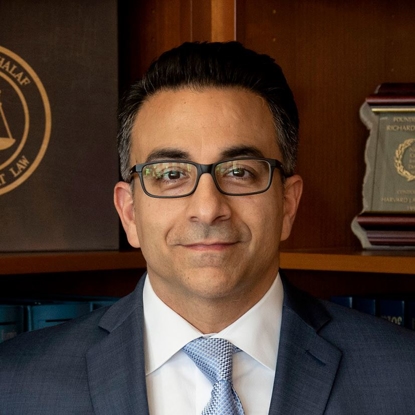
“I always advise them to immediately call Mark Khalaf.”
Several friends and relatives have been arrested for DUI, and I always advise them to immediately call Mark Khalaf. He has a track record of over 20 years of experience in Criminal Defense Law and a wealth of knowledge and experience in helping his clients navigate and represent them in court and the legal process.
My friends and relatives have told me that Mark provides in-depth explanations, keeps it real, offers realistic possible outcomes, and consistently keeps in contact.
I will continue to refer people to Mark, and I have peace of mind that I have a strong Attorney on my corner in case I ever need representation.
Support When You Are Facing A Second Or Multiple DUI
If you have been arrested for a second or multiple DUI in California, you are facing consequences that are far more serious than a first offense. Jail time, longer license suspensions, and lasting damage to your record all become real possibilities. In this moment, you may feel like you have no options.
We are available 24 hours a day to answer questions after an arrest and to offer a free and confidential initial discussion about your situation. You do not need to face this alone. To speak with a multiple DUI attorney Los Angeles residents can turn to in a crisis, call (626) 397-9700.
Why Repeat DUI Charges Are Different
When you already have a DUI on your record, a new arrest is often treated very differently by the court and by the California Department of Motor Vehicles. State law increases penalties with each DUI conviction that occurs within ten years. This often means greater exposure to jail, stricter probation, and longer periods of license suspension or ignition interlock.
For a second DUI, California law can require mandatory minimum jail time, longer DUI education programs, and higher fines. Judges in Los Angeles County generally consider your prior record, the facts of the new arrest, and whether you were on probation at the time. If this is a third or further DUI, the possible consequences can become even more severe.
Beyond the legal penalties, many people fear being labeled as a repeat offender. You may be worried about how this will affect your job, your professional license, or your immigration status. You may also feel ashamed in front of your family. These concerns are understandable, and they are part of why it is important to get informed guidance quickly.
When you are dealing with a second or multiple DUI, you need more than a general criminal defense lawyer. You need a team that understands how repeat DUI cases are charged, negotiated, and tried in the Pasadena and Los Angeles courts. At Hutton & Khalaf, our attorneys have more than 65 years of combined DUI and criminal defense experience and have handled over 700 trials.
This depth of courtroom experience matters when prosecutors take a firm stance on repeat DUI cases. Many second or multiple DUI cases do not resolve easily, and the possibility of motions or trial needs to be taken seriously. Our trial background gives us insight into how evidence is viewed in real courtrooms and how to prepare a case from the start.
We focus our work on DUI and criminal defense in Pasadena and the greater Los Angeles area, so we are familiar with local courthouses that serve this region. We understand the procedures in Los Angeles County criminal courts and how local practices can affect issues such as sentencing and probation in repeat DUI cases.
We also recognize that arrests do not happen only during business hours. Our attorneys are available to clients and families at any time, day or night, to address urgent concerns after a DUI arrest. We offer a free and confidential initial discussion, which allows you to speak openly about your situation and learn about possible next steps without any initial financial commitment.
What To Expect After A 2nd DUI
After a second DUI arrest, the process can feel confusing and rushed. You may be released from custody with paperwork that is difficult to understand. That paperwork usually includes a temporary driver's license and information about an upcoming court date. It may also refer to a deadline to contact the California DMV about your driving privileges.
In many cases, you have only a short period to request a DMV hearing to challenge an automatic license suspension. If that deadline is missed, the DMV can move forward with a suspension based on the arrest and the test results. It is often in your interest to address this quickly so that you know what to expect.
On the court side, your case will typically begin with an arraignment in a Los Angeles County criminal courthouse that serves the area where the arrest occurred. At that first appearance, the judge advises you of the charges, and you have the opportunity to enter a plea. Later dates can involve negotiations, motion hearings, and possibly a trial if the case does not resolve.
Potential penalties for a second DUI can include mandatory minimum jail time, years of probation, fines and assessments, participation in a multi-month or longer DUI education program, and installation of an ignition interlock device. For a third or further DUI, the court generally considers higher jail or even state prison exposure, as well as longer license consequences.
Our role as a 2nd DUI lawyer is to help you make sense of these possibilities in the context of your actual case. We work to review the evidence, understand your prior record, and identify issues that may be important during negotiations or at trial. We also explain how the court process and DMV process interact so that you are not surprised by developments in either system.
How We Defend Multiple DUI Cases
Defending a second or multiple DUI charge calls for careful attention to both the current arrest and your prior convictions. As a 2nd DUI defense attorney team, we begin by examining why you were stopped, how any field sobriety tests were conducted, and how breath or blood samples were obtained and handled. We also review the record of prior DUIs to see how they may affect the prosecution and potential sentencing.
Repeat DUI cases can involve added complications such as alleged probation violations and sentencing enhancements. These issues can limit the options that are available and can change how a prosecutor or judge views your case. Our experience in over 700 trials helps us prepare for situations in which cases do not resolve quickly and a contested hearing or trial becomes necessary.
At the same time, we recognize that many clients want to know whether there are alternatives to lengthy jail time and how their personal circumstances will be presented. We work to present you as a person with a life, a job, and a family, not just as a record on a screen. This can be important in discussions of treatment, programs, and other options that may be available in some cases.
Here are practical steps you can take right now:
Contact a 2nd DUI attorney as soon as possible so deadlines for court and DMV are not missed.
Gather any paperwork you received at the time of arrest and keep it in a safe place.
Write down your memory of what happened before, during, and after the stop while details are still fresh.
Avoid discussing the facts of your case on social media or with anyone other than your lawyer.
A multiple DUI lawyer in Los Angeles that defendants can rely on should be prepared to address both the legal and personal sides of your situation. Our goal is to guide you through each step, explain your options, and work to protect your future as much as possible under the circumstances.
Talk To Our 2nd DUI Lawyers Today
A second or multiple DUI arrests can make it feel like your life is spinning out of control. You may be worried about going to jail, losing your license, and letting down people who depend on you. Taking one step to understand your situation can make a difference in how you feel and in how you approach your case.
At Hutton & Khalaf, our attorneys bring decades of DUI defense experience in Pasadena and the surrounding area and have handled hundreds of trials involving serious charges. We offer a free and confidential initial discussion, and we are available 24 hours a day to speak with you or a family member after an arrest.
Frequently Asked Questions
Will I go to jail for a 2nd DUI?
Jail time is a real possibility for a second DUI, but the actual result depends on many factors. Courts look at your prior record, the facts of the new case, and local sentencing practices. We can review your situation and explain what the court may consider.
How long could I lose my license?
A second DUI can lead to a longer license suspension than a first offense, both through the DMV and the court. The exact length depends on test results, prior history, and whether you request a DMV hearing in time. We help clients understand these rules and options.
How quickly should I contact a lawyer?
It is usually best to contact a lawyer as soon as possible after a second or multiple DUI arrest. Important deadlines, including the time to request a DMV hearing, can come up quickly. Our team is available 24 hours a day so you can get guidance right away.
Can your team handle multiple prior DUIs?
Yes, we handle cases involving multiple prior DUIs. Our attorneys have more than 65 years of combined DUI and criminal defense experience and have handled over 700 trials. We are familiar with how prosecutors treat these cases and work to guide clients through these higher-risk situations.
Is our first conversation really confidential?
Yes, our initial discussions are free and confidential so that you can speak openly about your arrest and prior record. We know these situations are sensitive and often embarrassing. Our goal is to provide clear information and support, not judgment, from the first conversation forward.
We cannot change the past, but we can help you make informed choices about what comes next. If you are looking for a 2nd DUI attorney who will provide clear guidance, we encourage you to reach out. To talk with our team now, call (626) 397-9700.