

In the News Get The Defense You Deserve
  • 180 days in treatment program; no jail .28 breath - 4th offense felony DUI
  • Dry reckless; $200 fine Alleged refusal; 3rd offense
  • 180 days in treatment program; no jail .29 breath; 6th offense felony DUI
  • Drug treatment; no jail Felony battery on police officer; assault with deadly weapon under the influence of PCP
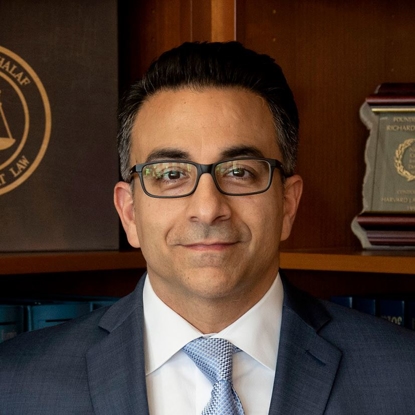
“I always advise them to immediately call Mark Khalaf.”
Several friends and relatives have been arrested for DUI, and I always advise them to immediately call Mark Khalaf. He has a track record of over 20 years of experience in Criminal Defense Law and a wealth of knowledge and experience in helping his clients navigate and represent them in court and the legal process.

My friends and relatives have told me that Mark provides in-depth explanations, keeps it real, offers realistic possible outcomes, and consistently keeps in contact.

I will continue to refer people to Mark, and I have peace of mind that I have a strong Attorney on my corner in case I ever need representation.
S.A.

We've Been Featured in the News

Click One of the Links Below for More Information

Kristin Smart case: New search warrants served in 'four separate locations'

  • SFGate - Feb. 5, 2020

2 men who caused the crash that killed Jesse Esphorst Jr. in Torrance convicted of manslaughter, reckless driving

  • The Daily Breeze - Jan. 22, 2020

Trial Begins for Pair Charged with Vehicular Manslaughter in Death of South High Baseball Player in Torrance

  • The Daily Breeze - Jan. 15, 2020

Was This ‘Creepy’ Los Angeles Sex-Crimes Cop a Serial Predator?

  • The Daily Beast - Dec. 04, 2018

Why families feel cheated by the criminal justice system when loved ones are killed on roadways

  • The Daily Breeze - May 11, 2018

Ex-Marine Found Guilty of Killing Two UCSD Medical Students In Drunk Driving Crash

  • The UCSD Guardian Online - Jan. 29, 2018

Ex-Marine's trial opens in DUI crash that killed 2 UCSD med students

  • The San Diego Union-Tribune - Jan. 9, 2018

Witnesses describe horrific accident that killed South High shortstop Jesse Esphorst Jr. in Torrance

  • The Daily Breeze - Oct. 31, 2017

Tears, pain fill courtroom as 72-year-old woman sent to prison for killing MMA fighter’s son in Hawthorne

  • The Daily Breeze - Aug. 10, 2017

Case against woman who killed MMA fighter’s son appears headed toward plea deal

  • The Daily Breeze - July 5, 2017

Hawthorne driver pleads not guilty in hit-and-run death of MMA fighter Marcus Kowal’s toddler son

  • The Daily Breeze - Nov. 15, 2016

Conrad Hilton III pleads not guilty in Indio Thursday

  • The Desert Sun - Sept. 17, 2015

Conrad Hilton III misses court appearance

  • The Desert Sun - July 13, 2015

Good News For Amanda! Bynes' Drivers License Reinstated After DUI Arrest — But She's Still Hospitalized

  • Radar Online - Oct. 21, 2014

Amanda Bynes arrested for DUI again

  • USA TODAY - Sept. 29, 2014

Amanda Bynes Strikes Plea Deal in DUI Case, Sentenced to 3 Years Probation

  • E! Online - Feb. 24, 2014

Attorney for Amanda Bynes says that the once-troubled star is doing fine on her road to recovery

  • Daily Mail - Feb. 20, 2014

Lamar Odom pleads no contest to DUI, gets probation

  • USA Today - Dec. 9, 2013

Lamar Odom DUI Charge: Former NBA Star Pleads No Contest, Sentenced to 3 Years Probation

  • Latin Post - Dec. 10, 2013

Amanda Bynes fit to stand trial for DUI case, judge rules

  • UPI.com - Nov. 21, 2013

Lamar Odom pleads not guilty In DUI case

  • Los Angeles Times - Oct. 9, 2013

Khloe Kardashian is in fighting form as she spends fourth wedding anniversary sweating at the gym after dropping Lamar Odom’s last name on Twitter

  • Daily Mail - Sept. 27, 2013

Amanda Bynes' Mom WITHDRAWS Petition For Conservatorship

  • Radar Online - Sept. 26, 2013

Amanda Bynes' drunk driving case moved to mental health court

  • Reuters - Sept. 24, 2013

Amanda Bynes Hospitalized After Starting Fire at a California Home

  • ClaimsJournal.com - July 25, 2013

Amanda Bynes Evicted From NYC Apartment After Bong Incident, Drug Arrest

  • Latin Times - June 3, 2013

Amanda Bynes is ‘normal,’ ‘fine’ and working to resolve her criminal cases, says lawyer

  • New York Daily News - May 29, 2013

Amanda Bynes has Beverly Hills court date Wednesday in DUI case

  • Los Angeles Times - May 28, 2013

Can anyone help Amanda Bynes? Bizarre behavior gets even more bizarre

  • Fox News - April 8, 2013

Amanda Bynes Skips Hearing for Driving on Suspended License Charges, Dyes Hair Pink

  • Yahoo! News - April 2, 2013

Amanda Bynes Hit-and-Run Charges Dismissed

  • E! Online - Dec. 14, 2012

Amanda Bynes charged with driving on a suspended license

  • Daily Mail - Sept. 21, 2012

Amanda Bynes Pulled Over, License Suspension Could Mean Trouble

  • E! Online - Sept. 10, 2012

Amanda Bynes Has Another (Small) Driving Mishap

  • People Magazine - April 13, 2012

Passenger in car that killed Marymount professor sues driver

  • The Daily Breeze - Jan. 14, 2012

RPV Teen Sentenced to 2 Years for Marymount Professor's Death

  • Patch.com - Jan. 9, 2012

Teen gets two years for professor’s death

  • The Daily Breeze - Jan. 6, 2012

Jaime Pressly pleads no contest to drunken driving

  • KAIT 8 - Aug. 26, 2011

Jaime Pressly Dodges Jail in DUI Case

  • E! Online - Aug. 25, 2011

Jaime Pressly pleads not guilty to DUI in LA

  • The Register Citizen - Feb. 5. 2011

Torrance woman cleared in fatal crash she blames on sudden acceleration

  • Los Angeles Times - Nov. 2, 2010

Screaming Paris Hilton Ordered Back to Jail

  • CNBC - June 8, 2007
Read More Read Less
  • Super Lawyers
  • CACJ
  • CDLA
  • NCDD

Trust in Our Experience

Vigorously Representing Clients for Over 45 Years Collectively
  • Handled 1000s of Cases
  • Available to Answer Questions 24/7
  • The Only “Recognized Leaders”© in LA County
  • We're Known as the "Lawyers' Lawyer"

Get Started With a Free Legal Consultation Now

Call 626-397-9700 or fill out the form below or to get started.
  • Please enter your first name.
  • Please enter your last name.
  • Please enter your phone number.
    This isn't a valid phone number.
  • Please enter your email address.
    This isn't a valid email address.
  • Please make a selection.
  • Please enter a message.
  • By submitting, you agree to receive text messages from Hutton & Khalaf at the number provided, including those related to your inquiry, follow-ups, and review requests, via automated technology. Consent is not a condition of purchase. Msg & data rates may apply. Msg frequency may vary. Reply STOP to cancel or HELP for assistance. Acceptable Use Policy

Our FAQ

Common Answers To Your Questions

Still have questions? We are here to help. Give us a call at 626-397-9700 today!

  • When does the officer have to read me my rights?

    Your "rights," otherwise known as the Miranda warnings, are a list of statements that law enforcement must recite to you before they can conduct a custodial interrogation. The Miranda warnings exist to protect your Fifth Amendment right against self-incrimination. If you understand these rights before you talk to law enforcement, the legal theory goes, anything you say after that will be voluntary. While the exact wording differs between jurisdictions, the warnings are essentially as follows: You have the right to remain silent. You have the right to have an attorney present. If you can’t afford an attorney, you will be provided one by the government. Anything you say can be used against you in court.

    Every state requires law enforcement officers to give the warnings in some form after taking a suspect into custody. The goal behind the requirement is to protect the truthfulness of the evidence that will be later used in court. If a person feels pressured or intimidated into talking, it is assumed that they are less likely to tell the truth and more likely to tell the officer what they want to hear. Verdicts based on coerced confessions erode the efficacy of the criminal justice system, and the Miranda warnings are intended to protect suspects from their own tendency to succumb to intimidation.

    So, do the officers have to read you your rights? The question hinges on whether you are in custody or not. The rule of thumb in determining the custody question is whether or not you feel free to leave. In most cases, the answer is pretty easy — if you’ve been arrested, then you are in custody and law enforcement must give you the Miranda warnings. There are some situations, however, that aren’t so simple. For example, what if the officer has stopped you on the street but hasn’t officially arrested you yet? Or, what if you have consented to the officer entering your home for a chat? You may not be in handcuffs or at the station, but you still may be in custody.

    Of course, most people don’t feel free to leave when they’re talking to law enforcement, but in the event that you did say something incriminating before the officer gave you the Miranda warnings, a good attorney can help you determine whether you were in custody and whether a judge should disallow your statement to be entered as evidence against you.

  • What happens if my child is arrested?

    For almost a hundred years, there has been a separate system of justice for juveniles in the United States. Legislators have attempted to design a system that focuses on rehabilitation and education rather than punishment and retribution. When a minor is arrested and taken into custody, they will likely be referred to an “intake officer” who specializes in juvenile justice. That officer will first evaluate the case and the circumstances, and then decide whether formal charges are necessary. Depending on the severity of the crime and the minor’s criminal history, an intake officer can decide not to move forward with formal charges and can choose instead from less severe penalties ranging from an informal reprimand, to counseling, compensation for property damage, or community service.

    Depending on the severity of the crime and the child’s record, an intake officer may decide that formal charges are necessary. A minor might remain in custody in a juvenile justice facility or a foster home while waiting for their arraignment, where a juvenile court judge will read the minor the charges against him or her. At that point, the lawyers for both sides will usually discuss whether a plea agreement is possible or desirable, or whether the case should move forward. In the juvenile justice system, there are no jury trials and all cases are heard before a judge. The judge then makes the decision as to whether the minor should be “adjudicated delinquent,” which is analogous to being found guilty in adult court.

    Juveniles, like adults, have to the right to an attorney and the right to remain silent. If they are in custody, law enforcement must give them the Miranda warnings so that they can better know their rights before they answer any questions.

    There are certain kinds of crimes — called “status offenses” — that are only crimes if committed by a minor. These would include skipping school or curfew violation, and most of the time they carry less serious punishments. In contrast, there are crimes so severe that a judge can use a tool called “judicial waiver.” This means that a judge decides that a minor should not be afforded the protection of the juvenile justice system, but should be tried as an adult.

    Juvenile records are sealed, which means they are not to the public. If a juvenile agrees to and meets certain conditions, his or her record can be expunged — erased, essentially — when he or she turns eighteen. As with most criminal matters, finding an experienced attorney early in the process can help guarantee your child gets the most favorable treatment possible.

  • What does "beyond a reasonable doubt" mean?

    Proving guilt “beyond a reasonable doubt” refers to the standard of proof the prosecution must meet in a criminal case. The standard of proof is the level of certainty each juror must have before determining that a defendant is guilty of a crime.

    In practice, it is impossible to precisely define “reasonable doubt.” It can be easier to understand, however, by contrasting it to the standards of proof used in civil trials. In a civil trial, where a person’s freedom is not at stake, there are two possible standards of proof that must be met in a case. One is the “preponderance of the evidence” standard, which means certain facts or evidence presented at trial are more likely than not to be true (just over 50% is fine). The other standard is “by clear and convincing evidence,” which means that there is a high probability that a piece of evidence is true. Reasonable doubt is defined somewhat differently depending on what jurisdiction you’re in, but essentially, a juror can have some doubt in her mind, but it cannot be one that would affect a reasonable person’s “moral certainty” that a defendant is guilty. Because a defendant’s liberty is often at stake in a criminal trial, the reasonable doubt standard is the highest standard in the legal system.

    Another vital component of the criminal trial is the requirement that the prosecution bears the “burden of proof.” A defendant is presumed innocent until proven guilty, and therefore it is the prosecution’s job to build a case against the defendant, not the other way around. This may seem like a minor distinction, but if the prosecution simply had to accuse the defendant of a crime and then wait for the defendant to prove that he or she didn’t do it, a corrupt prosecutor could charge anyone with any crime, without proof. If, under that system, the defendant had no alibi, the jury might be forced to convict based on very little evidence.

    The drafters of the Constitution were wary of a legal system with too much power, and promised that no person under the law should be deprived of life, liberty, or property without due process of law. Requiring the prosecution to prove each element of a crime beyond a reasonable doubt is one way in which the justice system protects each defendant’s fundamental right to due process.